
HPV and Cervical Dysplasia: A Complete Guide to Understanding CIN and Supporting Immune Health
By: Emily Golden | Founder, Sacred Womb Healing | Updated March 2026 | 12-14 minute read
Educational Content. Sources Cited Below.
If your chest tightened when you saw the words HPV, abnormal Pap, or cervical dysplasia on your results, pause for a moment and take a breath. I know how overwhelming that moment can feel. I still remember when my Pap results came back abnormal – not once, but persistently. The first time, you tell yourself it’s probably nothing. By the second or third time, that reassurance starts to wear thin. When my results eventually came back as CIN 2/3, I wasn’t just scared. I was exhausted from the uncertainty and frustrated that my body wasn’t clearing a virus that is widely described as common and temporary. I was desperate for information that actually helped, rather than sending me deeper into a downward spiral.
Receiving a diagnosis is not the same as understanding what’s happening in your body. This guide exists to give you the clarity most women leave that appointment without. What follows is a clear, research-aware explanation of what’s happening at the cellular level, how cervical changes are medically defined, and what the data actually tells us about risk and regression. It also explores the supportive approaches many women integrate alongside continued medical care.
Table of Contents
Understanding an HPV or Abnormal Pap Result
Before the information can settle, the nervous system has to. If your results caught you off guard, that stress response is completely normal. The body registers uncertainty as a threat before the mind has time to evaluate the actual risk. Before we go deeper, it helps to anchor a few key facts about HPV and cervical dysplasia.
HPV is among the most common viral infections worldwide. According to the Centers for Disease Control and Prevention (CDC), most sexually active people will encounter HPV at some point in their lives. Many never develop symptoms or realize they were infected. The CDC also notes that in most cases, the immune system clears or suppresses the virus naturally, often within one to two years.
Cervical dysplasia is something different from HPV, though the two are related. Dysplasia refers to cellular changes on the surface of the cervix. These changes are identified under a microscope, graded by a pathologist, and tracked over time. These changes are not cancer. They are not a guarantee of cancer. Instead, they act as a signal. Many cases are carefully graded and monitored because the body can resolve them without intervention.
What most women are never clearly told is this: HPV is a viral infection. Cervical dysplasia is the tissue response. You can have HPV without dysplasia. You can have mild dysplasia that regresses on its own. They are connected, but they are not the same thing. Much of the confusion begins with not fully understanding how HPV behaves in the body, especially when dormancy, reactivation, and testing limitations shape what a positive result actually means.
The National Cancer Institute reports that when cervical cellular changes do progress, they usually develop slowly. This process typically unfolds over years, not weeks or months. That timeline is one reason clinical guidelines often prioritize structured monitoring instead of immediate intervention. It creates space for informed decision-making rather than fear-driven reaction.
What Is HPV? Understanding the Virus First
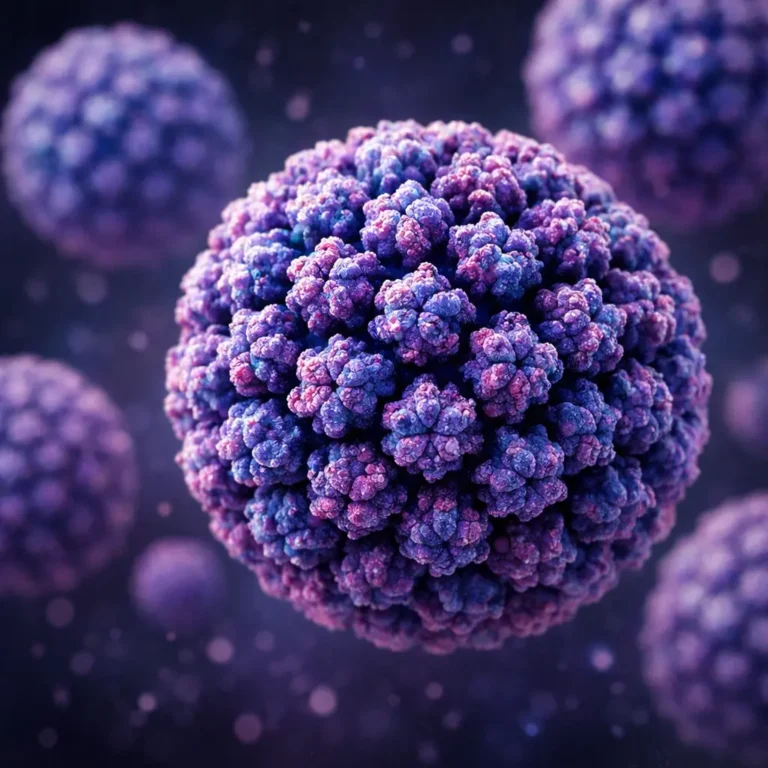
Human papillomavirus (HPV) refers to a large family of more than 200 related viral strains. These viruses infect epithelial cells, the thin layers of tissue that line the skin and mucosal surfaces, including the cervix. Unlike viruses that circulate through the bloodstream, HPV lives in surface tissue. That detail matters because it shapes both how the virus spreads and how the immune system interacts with it.
One of the most important and least-discussed realities of HPV is that a positive test does not tell you when you were exposed or from whom. HPV can remain dormant or undetectable for months or even years. Because of that, a positive result cannot be used to draw conclusions about timing, fidelity, or relationship history. Medically, that is simply not how the virus behaves, and the emotional harm caused by this misunderstanding is both real and unnecessary.
Most HPV infections resolve naturally as the immune system does its work. Observational data consistently show that approximately 80-90% of HPV infections are cleared spontaneously within 24 months after detection. This pattern is documented across multiple population studies. This process is driven primarily by cell-mediated immunity, the part of the immune system responsible for identifying and eliminating infected cells.
Even so, clearance does not always mean the virus has been completely eliminated from the body. More often, it means the virus has been suppressed to levels that standard testing cannot detect. What changes clinical concern is persistence. When the same high-risk HPV type is found at two or more screenings over roughly 12 months, it is considered a persistent infection.
Persistent high-risk HPV can begin to alter the normal regulation of cervical cells. Two viral proteins, E6 and E7, are known to interfere with key cell-cycle control mechanisms inside infected epithelial cells. Over time, that disruption can lead to abnormal changes in cervical cells. When those changes are identified under a microscope, they are called cervical dysplasia, also known as cervical intraepithelial neoplasia, or CIN. This is how persistent HPV infection can lead to cervical dysplasia, a connection supported by long-term clinical data.
Understanding Cervical Dysplasia: What CIN 1, 2, and 3 Mean
Cervical dysplasia is not something you feel. It refers to how cervical cells look under a microscope and how those changes are classified. Understanding what this grading system actually measures can significantly reduce unnecessary fear.
The cervix is covered by layered epithelial cells. The outer portion of the cervix, called the ectocervix, is lined with squamous cells arranged in structured layers. These cells gradually mature as they move toward the surface. At the base are immature cells that continually divide and renew. HPV infects the basal cells of the cervical epithelium, often through small areas of disruption in the surface tissue. This commonly occurs in the transformation zone — the area where squamous and glandular cells meet. This region is biologically active and especially susceptible to viral influence.
When high-risk HPV persists, the viral proteins E6 and E7 can interfere with basal cell division and maturation. Instead of maturing in an orderly pattern toward the surface, some cells begin to show abnormalities in size, shape, and organization. A pathologist identifies these changes as cervical dysplasia, also called cervical intraepithelial neoplasia (CIN). The CIN grading system reflects how much of the epithelial thickness is occupied by abnormal cells.
• CIN 1 (mild dysplasia): Abnormal cells are confined to the lower one-third of the epithelial layer. This grade is strongly associated with transient HPV infection and, in many cases, regresses without intervention. Observational data consistently show that many CIN 1 lesions regress within one to two years, with the majority resolving over a two-year observation period.
• CIN 2 (moderate dysplasia): Abnormal cells extend into the lower two-thirds of the epithelium. This is an intermediate category with more variability in behavior. Research published in The Lancet has shown that regression rates in younger women, particularly those under 30, can approach 40-60% over two years. Because of this, some clinical guidelines allow for observation in carefully selected patients.
• CIN 3 (severe dysplasia): Abnormal cells involve more than two-thirds of the epithelial thickness and may span the full layer. However, they remain confined to the surface and have not invaded deeper tissue. That distinction is critical: CIN 3 is not invasive cancer. It is a high-grade precancerous change that carries a greater risk of progression over time if left untreated.
The keyword across all three grades is intraepithelial. The changes are limited to the surface lining. They have not invaded the underlying tissue. That boundary is what separates dysplasia from invasive cervical cancer.
CIN is also a histological diagnosis, meaning it is made by examining tissue, typically through a biopsy. A Pap smear screens for abnormal cellular features but cannot assign a CIN grade on its own. If a Pap or HPV test suggests higher-grade changes, a colposcopy and biopsy may be recommended to determine the actual tissue classification. These are related but distinct parts of the screening and diagnostic process.
The grading system is intended to assess risk and inform appropriate next steps, not to create panic. Most cases of dysplasia do not progress to cancer. Many resolve over time. Some require monitoring, and higher grades may lead to treatment discussions. None of these findings automatically mean an emergency or a decision that must be made from a place of fear.
Why HPV Clears Quickly for Some Women and Persists for Others
When I was navigating my own abnormal results, this was the question no one clearly answered. If HPV were common and often resolved naturally, why hadn’t my body cleared it? My doctor advised me to lower my stress. At the time, it felt dismissive. What I’ve since learned is that he wasn’t wrong. He just never explained how chronic stress impacts immune response or how that can influence viral persistence.
HPV clearance is driven by cell-mediated immunity. This branch of the immune system identifies and eliminates infected epithelial cells. T-cells, natural killer cells, and other immune mediators must recognize the virus and mount an effective response. When immune signaling functions properly, viral replication declines and HPV often becomes undetectable. When the immune system is under strain or dysregulated, the likelihood of persistence increases.
Immune Suppression
Research consistently shows that women with compromised immune function have higher rates of HPV persistence and progression to dysplasia. This can occur due to medical conditions, medications, or chronic systemic inflammation. This highlights an important point: HPV behavior often reflects immune status more than viral aggression. The virus doesn’t “decide” to stay. It persists when the immune environment fails to suppress it.
Chronic Stress and the Cortisol Connection
Chronic psychological stress, unresolved trauma, and prolonged elevations in cortisol have been shown to affect how the immune system functions. A study published in BMC Cancer by Meijer and colleagues in 2021 found that higher levels of chronic stress and elevated diurnal cortisol were associated with both the presence and persistence of high-risk HPV infection in young women. Separate research published in the Annals of Behavioral Medicine found that higher perceived stress was associated with an impaired T-cell response to HPV in women with cervical dysplasia. This directly links psychological stress to the immune mechanism involved in viral control. Stress does not cause HPV. But when the body remains chronically dysregulated, clearing the virus can become more difficult.
Pregnancy and Postpartum Changes
During pregnancy, the immune system shifts in order to tolerate and protect the developing baby. This adjustment is normal and necessary, but it can temporarily change how the body responds to viruses. After birth, that shift doesn’t immediately snap back. The postpartum period often brings hormonal changes, sleep deprivation, nutrient depletion, and elevated stress, all of which can temporarily affect immune balance. For some women, this is when abnormal Pap results first appear or reappear.
Smoking
Smoking is one of the strongest and most consistently documented lifestyle factors linked to persistent HPV infection and progression to higher-grade cervical changes. Studies have confirmed that nicotine and its derivatives are detectable in cervical mucus in smokers. This means the cervix is exposed to these compounds locally, not just systemically. A longitudinal study published in Cancer Causes & Control found that smokers maintained HPV infections significantly longer than non-smokers and had a lower probability of clearing an oncogenic infection. Smoking is also associated with reduced immune responsiveness in cervical tissue. Even light smoking increases risk. Among lifestyle variables, this is one of the most clearly supported links to the persistence and progression of dysplasia.
Micronutrient Status
Several nutrients, including folate, vitamins A, C, D, and E, and certain carotenoids, play a role in immune regulation and cellular health. A systematic review and meta-analysis published in Frontiers in Nutrition in 2025 found that higher circulating or dietary folate and B12 levels were consistently associated with reduced HPV persistence and lower cervical dysplasia risk across multiple studies. Vitamin D deficiency has also been examined in this context. Observational data suggest that low vitamin D levels are associated with impaired immune regulation and higher rates of HPV-related cervical changes. Supplementation is not a cure or standalone solution for HPV. However, when nutrient levels are insufficient, the immune system may not function as efficiently as it could.
The Gut and Vaginal Microbiome
Researchers are increasingly studying the connection between the gut microbiome, the vaginal microbiome, and how the body responds to HPV. This area of research is still evolving, but one pattern is becoming clearer: the immune system does not operate in isolation. The health of the gut, the balance of vaginal bacteria, inflammation levels, stress, and nutrient status all interact. Persistent HPV is rarely just about the virus itself. It reflects the broader state of the body’s immune environment.
Evidence-Informed Ways to Support the Body
Supporting the body during HPV infection or cervical dysplasia is not about attacking a virus. It is about creating the internal conditions that enable immune surveillance to function effectively. This includes reducing inflammatory load, addressing nutrient deficiencies, and stabilizing the physiological environment where cellular repair occurs. None of these approaches replaces medical monitoring. They work alongside it.
Immune Support
Cell-mediated immunity is one of the primary ways the body suppresses HPV. Several research-supported strategies have been studied for their ability to support this type of immune response.
AHCC, or Active Hexose Correlated Compound, is a standardized extract made from cultured shiitake mushroom mycelia. It has drawn research interest in the context of persistent high-risk HPV. A phase II randomized, double-blind, placebo-controlled study published in the Journal of Gynecologic Oncology by Smith and colleagues in 2022 found that AHCC supplementation was associated with elimination of persistent high-risk HPV infections, with a response rate of approximately 59% among participants who received supplementation. Earlier pilot studies reported by the same research group observed HPV clearance in 44 to 67% of women with persistent infections. The proposed mechanism involves modulation of T-cell and natural killer cell activity, the same immune pathways involved in viral suppression. These studies are limited in size and duration, and AHCC is not included in formal screening or treatment guidelines. It should not be framed as a cure. However, its proposed mechanism aligns with what we understand about how the body suppresses HPV.
Beta-glucans and other mushroom-derived polysaccharides have also been studied for their ability to influence immune function. The broader takeaway is that immune support works at the systems level. It is not about one supplement, but about supporting the overall environment in which the immune system operates.
Nutritional Foundation
Cervical tissue is constantly renewing itself, especially in the transformation zone where most HPV-related changes occur. That ongoing cellular repair requires adequate nutrients. Folate, vitamins A, C, and E, zinc, selenium, and carotenoids all play important roles in maintaining healthy cervical cells, supporting antioxidant defenses, and regulating immune activity. A comprehensive systematic review published in Healthcare in 2023 by Ciebiera and colleagues concluded that folate, vitamin D, and zinc supplementation showed the most consistent evidence for supporting CIN regression and modulating inflammatory biomarkers in women with HPV-related cervical changes.
While supplements can help correct deficiencies when needed, they do not replace a foundation built through consistent nutrition. The body uses nutrients most effectively when they are obtained through balanced dietary patterns that support overall immune resilience. Nutritional sufficiency creates the internal environment where immune regulation and cellular repair can function properly. It supports the process. It does not independently reverse dysplasia.
Lifestyle Factors
Smoking cessation is one of the most clearly supported lifestyle changes for reducing cervical health risk. Among all modifiable factors, smoking has the strongest and most consistent link to HPV persistence and progression. If you smoke, this is the area where the evidence is most direct.
Sleep also plays a critical role in immune function. Ongoing sleep deprivation reduces the activity of key immune cells and increases inflammation. For women in postpartum recovery or living under chronic stress, sleep is not optional. It is foundational to immune resilience.
Blood sugar balance matters as well. When insulin levels are chronically elevated or blood sugar fluctuates widely, inflammation tends to increase and immune function can become less efficient. Eating balanced, nutrient-dense meals that stabilize blood sugar supports both hormonal balance and immune regulation.
Nervous System Regulation
The immune system and nervous system are closely connected. When the body remains in a prolonged stress state, immune function changes in measurable ways. Chronic stress can reduce the precision of the immune response and increase background inflammation. Because HPV is controlled by the immune system, nervous system regulation becomes part of the larger picture of cervical health.
Restorative sleep, breath-based relaxation, trauma-informed therapy, gentle movement, and sustainable stress reduction practices all influence the immune pathways involved in viral suppression. These are not symbolic wellness additions. They affect biology.
Many women navigating HPV or cervical dysplasia carry fear, shame, and hypervigilance alongside their diagnosis. That constant internal stress response increases the body’s overall strain and can make immune regulation more difficult. Supporting your nervous system is not separate from supporting your cervical health. It is part of it.
Monitoring vs. Intervention: Understanding Your Options
Once cervical dysplasia is identified, the next question most women ask is: What happens now? There is no single answer. Management depends on several factors, and understanding that variability allows you to make an informed decision rather than one driven by fear.
In the United States, clinical guidance is published by the American Society for Colposcopy and Cervical Pathology(ASCCP). Per the 2019 ASCCP risk-based management consensus guidelines, recommendations are individualized based on HPV type, Pap results, prior screening history, and other factors. The reason for this layered approach is straightforward: different grades of dysplasia carry different statistical probabilities of progression.
Active Surveillance (Watchful Waiting)
For many women with CIN 1, and for some with CIN 2, structured surveillance is a medically supported option. This approach, often referred to as watchful waiting, involves repeat HPV testing, Pap testing, or colposcopy at defined intervals. The reasoning is straightforward: a meaningful percentage of low-grade lesions regress naturally within one to two years.
Surveillance is not the same as doing nothing. It is a deliberate clinical decision based on data about natural regression and short-term progression risk. When the estimated risk of progression is low, monitoring can reduce the likelihood of unnecessary surgical intervention. For younger women in particular, whose immune systems are often more likely to resolve dysplasia, conservative management may be both appropriate and preferred.
From personal experience, I know surveillance can be emotionally challenging. Living with uncertainty between appointments requires a level of nervous system regulation that few women are prepared for. Some feel reassured by close follow-up. Others find the waiting difficult.
Excisional Procedures
For higher-grade lesions, particularly CIN 3 or persistent CIN 2, providers often recommend an excisional procedure. The most common is LEEP (loop electrosurgical excision procedure), which uses a thin wire loop with electrical current to remove the abnormal surface tissue. In certain clinical situations, a cold knife conization may be recommended instead.
These procedures are preventative. They remove the area of abnormal cells on the cervix, but they do not eliminate the underlying HPV infection itself. HPV may still be detectable after treatment, which is why ongoing monitoring remains part of long-term cervical care.
Excisional procedures also come with considerations, especially for women who hope to have future pregnancies. The amount and depth of tissue removed can influence cervical integrity, which may play a role in pregnancy or labor in some cases. This relationship has been described in obstetric research. It does not mean treatment should automatically be declined. It does mean you deserve a clear explanation of what is being recommended, how extensive the removal will be, and how your reproductive plans factor into the decision.
How Decisions Are Guided
Several factors influence which approach may be most appropriate, including the grade of cervical changes, the specific HPV type and whether it has persisted, your age, reproductive goals, overall health, and your personal comfort with risk. Informed consent means understanding not only what is being recommended, but why. That includes knowing your estimated likelihood of regression if you choose surveillance, as well as the potential risks and tradeoffs associated with treatment.
Ask your provider to walk you through those details. You have the right to understand your individual risk profile and how it informs the plan being proposed.
The Emotional Weight of an HPV Diagnosis
An HPV diagnosis rarely feels neutral. Even though the physical changes usually unfold slowly, the emotional response can arrive quickly and feel destabilizing before your mind has time to process what is actually happening. The nervous system reacts to perceived threat before the rational mind has sorted through context.
Part of that reaction comes from cultural framing. HPV is classified as a sexually transmitted infection. It is associated with cancer. It is often delivered in brief clinical language without meaningful explanation. When context is missing, the mind fills in the blanks, often defaulting to worst-case scenarios. Shame can surface quickly because women’s sexual health continues to be judged and moralized in many medical and cultural spaces. Some women question past relationships. Some fear judgment. Others internalize the diagnosis as a reflection of their character or cleanliness. These responses are emotional layers shaped by incomplete information and longstanding stigma.
There is also relational fear. Questions arise about where the infection came from, what it means for your partnership, and whether trust is at risk. Medically, HPV can remain dormant for years, and it is so widespread that it is often impossible to trace when or from whom it was acquired. Still, logical information does not always quiet anxiety, especially when intimacy and vulnerability are involved.
For women who hope to have children or who are already mothers, the diagnosis can feel heavier. The cervix is not just an anatomical structure. It is connected to fertility, pregnancy, and birth. Even when the clinical risk is low, the idea of cellular changes or procedures in that area can stir anxiety about safety, identity, and the future. The fear is often less about statistics and more about what the diagnosis represents.
Then there is the weight of waiting. Living between appointments, not knowing whether results will improve or progress, and navigating defined monitoring intervals can be more difficult than the diagnosis itself. Even when the research is reassuring, the lived experience of uncertainty is real.
An important part of this process is learning to distinguish between emotional intensity and true medical urgency. HPV is common. Cervical dysplasia is monitored carefully because, in most cases, it develops gradually over time. Your emotional response may feel urgent even when the medical situation is not. Both experiences can exist at the same time. The work is acknowledging the emotion without allowing it to dictate medical decisions.
Remaining in a constant state of high alert does not improve outcomes. It only drains your system. A regulated nervous system supports clearer thinking and steadier immune function. This does not mean suppressing emotion. It means creating enough internal steadiness for accurate information to gradually replace fear-driven narratives.
Moving Forward With Clarity
The most important reframe is this: an HPV diagnosis or cervical dysplasia is a management situation. It is not a moral verdict. It is not a reflection of your character. And in most cases, it is not a medical emergency. It is information about what your body is showing right now. Information creates options.
In time, my results returned to normal. No abnormal cells. No HPV detected. That came after a year of focusing on what I could influence: nutrition, nervous system regulation, restorative sleep, and later, targeted supplementation once I had finished breastfeeding. I share that not as a guarantee, but as evidence of what became possible when I stopped reacting from fear and started acting from understanding. Every woman’s body and circumstances are different. My experience became the foundation for Sacred Womb Healing.
Moving forward is rarely one single decision. It is a combination of aligned actions that do not compete with each other.
It means maintaining appropriate medical follow-up. Attending your appointments. Understanding what each test measures. Working with a provider who welcomes questions. You are allowed to seek a second opinion. You are allowed to understand your individual risk profile before making a decision.
It also means strengthening immune resilience alongside medical care, not in opposition to it. Supporting your body through consistent sleep, reducing chronic inflammation, restoring nutrient sufficiency, stabilizing blood sugar, and regulating your nervous system creates an internal environment where repair is more likely to occur.
It means gradually replacing fear with literacy. As you understand what HPV is, what dysplasia represents, how risk is calculated, and what progression timelines actually look like, the fear narrative loses intensity. That understanding builds over time. This guide is one step in that process.
You are not navigating a crisis. You are navigating information. And when information replaces panic, decisions become steadier, more intentional, and more aligned with your long-term health.
Medical Disclaimer
This article is intended for educational purposes only. It does not constitute medical advice, diagnosis, or treatment. All clinical decisions, including monitoring intervals and treatment options, should be made in partnership with a qualified healthcare provider. Individual outcomes vary. Regression and progression rates cited reflect population-level data and cannot predict any individual’s course.